Fragile items are often the first to break when packing is rushed or handled incorrectly. Glassware, electronics, artwork, and decorative pieces all require extra care to make it through a move without damage.
Taking the time to pack them properly can prevent costly replacements and unnecessary stress. Packing tips fragile items need for safe moving focus on protection, organization, and secure placement.
The right materials, proper cushioning, and careful labeling all help reduce the risk of shifting or impact during transport. Even small adjustments in how items are packed can make a big difference.
With a clear approach, you can protect your most delicate belongings and move with greater confidence knowing they’ll arrive intact.
Packing Tips Fragile Items Need That Prevent Damage
What Are the Best Materials for Packing Fragile Items?
Choosing the right materials is one of the most important steps when preparing delicate belongings for a move. The way an item is packed often matters just as much as how it is handled in transit.
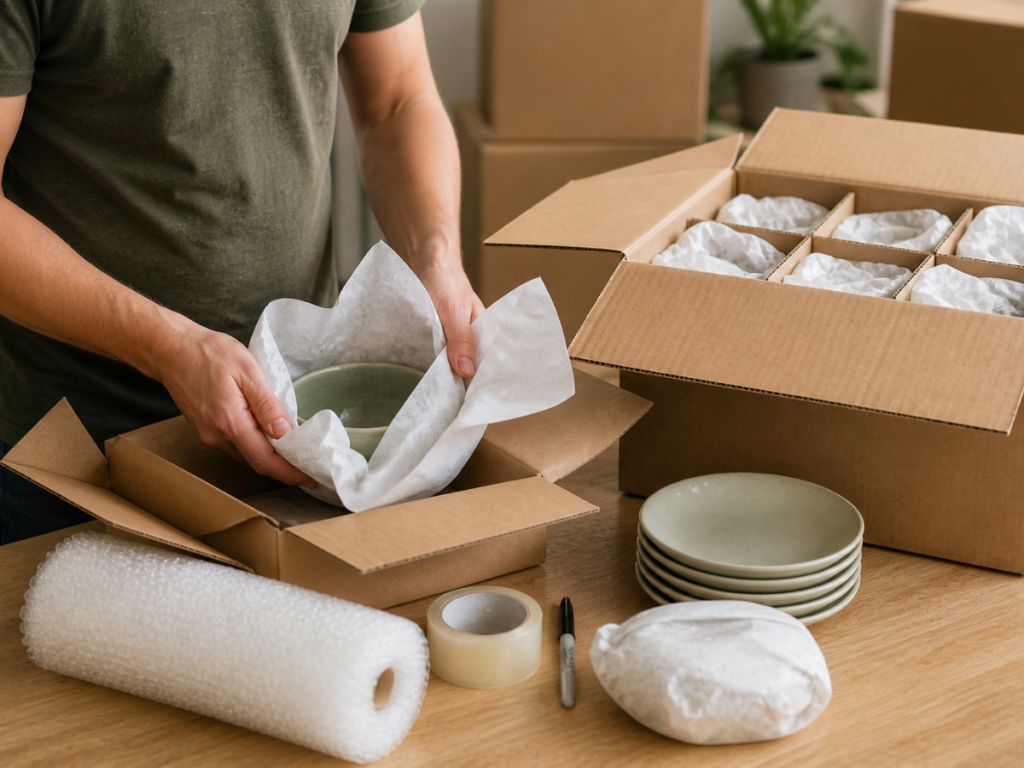
Using reliable materials creates a buffer between your items and the inevitable bumps that happen along the way. When following packing tips fragile items require, the goal is to reduce movement, absorb impact, and prevent surfaces from coming into direct contact with one another.
Rather than relying on a single material, it helps to think in layers. Each layer serves a different purpose, from protecting surfaces to stabilizing items inside the box. This approach gives fragile items a much better chance of arriving intact.
Choosing Cushioning Materials That Absorb Impact
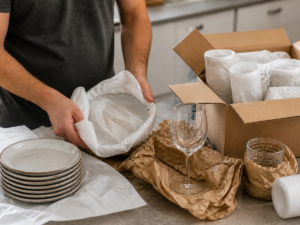
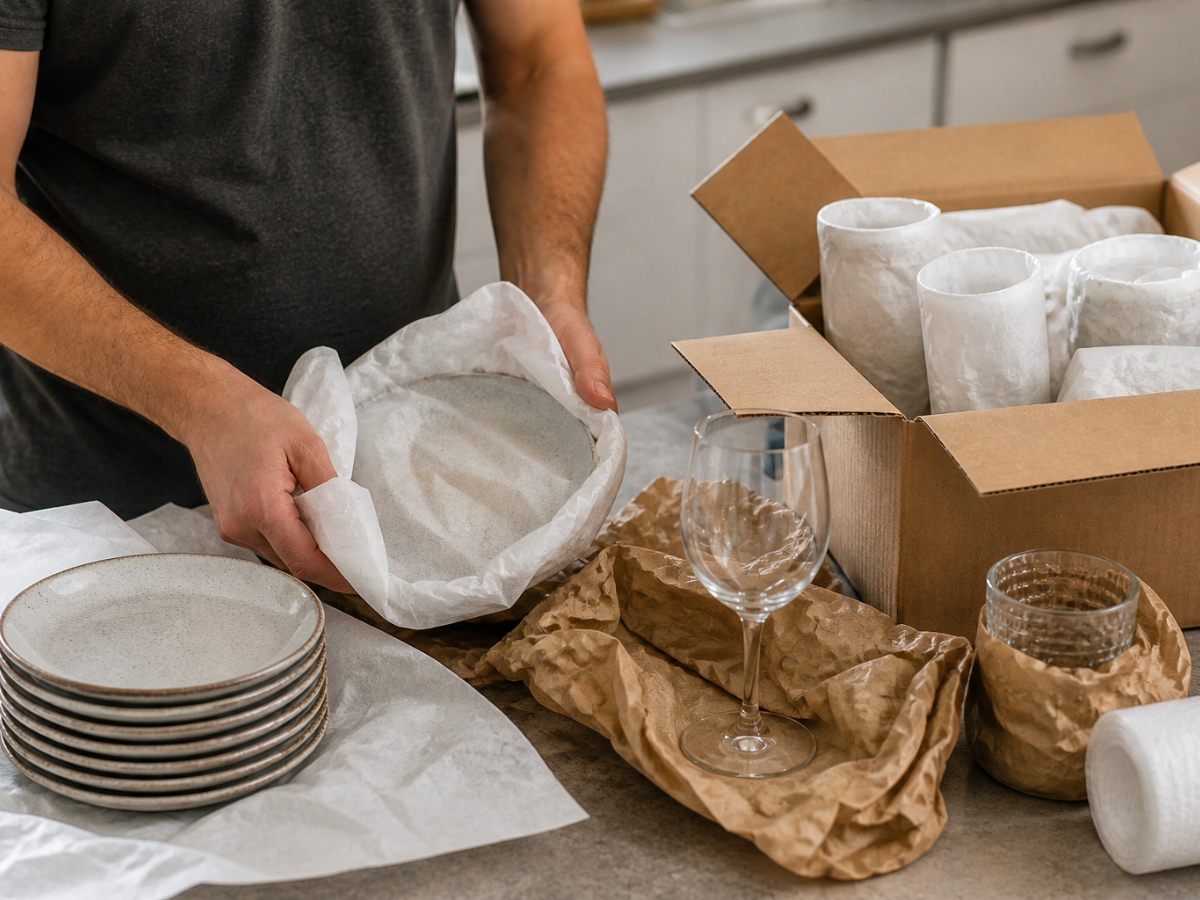
Cushioning is the first line of defense when packing anything breakable. Bubble wrap is one of the most widely used options because it creates small pockets of air that help absorb shock. Wrapping items fully, rather than just covering certain areas, ensures that pressure is distributed evenly if the box shifts during transport.
Packing paper offers a different type of protection. While it does not provide the same level of cushioning as bubble wrap, it works well for wrapping surfaces and preventing scratches.
It is especially useful for dishes, glassware, and other items that need a soft barrier without adding too much bulk. Using both materials together can be more effective than relying on just one.
For example, wrapping an item in packing paper first and then adding a layer of bubble wrap creates a combination of surface protection and impact resistance. This layered approach aligns with packing tips fragile items often require for safer transport.
Using Structural Supports To Prevent Movement
Once items are wrapped, the next priority is keeping them stable inside the box. Even well-cushioned items can break if they are allowed to shift too much. This is where structural supports come in.
Dividers designed for dishes and glassware help keep items separated, reducing the risk of them knocking into each other. These inserts are particularly useful for kitchen items, where multiple fragile pieces are packed together. By creating individual compartments, they limit movement and provide consistent spacing.
Corner protectors are another helpful addition, especially for flat or framed items. These protect the most vulnerable edges, which are often the first areas to get damaged during handling. When combined with proper wrapping, they add an extra layer of security that is easy to overlook but highly effective.
Selecting Boxes That Support And Protect
The box itself plays a bigger role than many people expect. A sturdy, well-sized box helps maintain the integrity of everything inside. If a box is too large, items may shift even if they are wrapped carefully. If it is too weak, it may collapse under weight or pressure.
Choosing durable boxes that match the size and weight of your items helps keep everything more secure. It is also important to reinforce the bottom with strong packing tape so it can handle the load without giving way.
Filling any remaining gaps with packing paper or soft materials ensures that items stay in place and do not move around during transit. Good box selection is a key part of effective packing tips fragile items depend on. It ties together all the other materials and helps them perform as intended.
Building A Reliable Packing System
When all of these materials are used together, they create a system rather than a single solution. Cushioning protects against impact, structural supports prevent shifting, and sturdy boxes provide overall stability. Each element contributes to the same goal of keeping fragile items safe from start to finish.
Taking the time to choose the right materials and use them thoughtfully can make a noticeable difference. It reduces the stress of unpacking and gives you confidence that your most delicate belongings are well protected throughout the move.
Are Eco-Friendly Alternatives Effective For Fragile Item Packing?
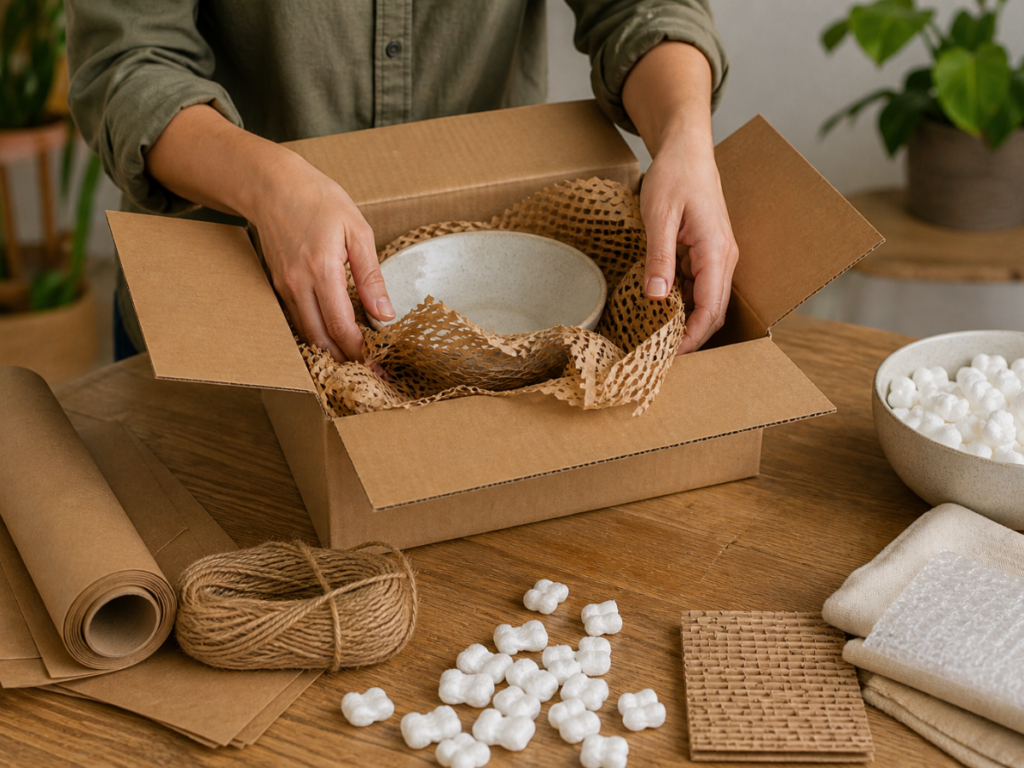
As more people look for ways to reduce waste during a move, eco-friendly packing options have become increasingly popular.
The question is not just whether these alternatives are better for the environment, but whether they can actually protect delicate belongings.
In many cases, the answer is yes. When used correctly, sustainable materials can support the same level of protection as traditional options while aligning with more mindful packing habits.
The key is understanding how these materials function and where they work best. Effective packing tips fragile items rely on do not change simply because the materials are different.
You still need cushioning, stability, and thoughtful placement. Eco-friendly options can meet these needs when chosen carefully and used with intention.
How Recycled Materials Provide Reliable Protection
Recycled packing paper is one of the most accessible alternatives to standard wrapping materials. It offers a soft barrier that helps prevent scratches and minor surface damage, making it especially useful for dishes, glassware, and decorative items.
While it may not provide the same level of cushioning as bubble wrap on its own, it can still be highly effective when layered properly. Using multiple sheets of recycled paper to wrap each item creates a thicker protective layer.
It can also be crumpled and used to fill empty spaces inside boxes, helping to prevent movement during transit. This dual purpose makes it a practical choice for those looking to follow packing tips fragile items benefit from while reducing reliance on single-use plastics.
Another advantage is flexibility. Recycled paper can be shaped around items of different sizes and angles, allowing for a more customized fit. This helps create a snug packing environment that limits shifting.
Why Biodegradable Fillers Work For Shock Absorption
Cushioning materials play a major role in protecting fragile items, and biodegradable packing peanuts offer a sustainable way to absorb impact. Made from natural, plant-based materials, these fillers break down easily after use but still provide reliable support during transport.
When used to fill gaps inside a box, biodegradable peanuts help distribute pressure evenly. This reduces the chance of items colliding or settling into unstable positions. They are especially useful for irregularly shaped objects that are harder to secure with paper alone.
What makes them effective is how they adapt to movement. Instead of staying rigid, they shift slightly to absorb shocks, which helps protect items from sudden impacts. This aligns well with packing tips fragile items depend on, where minimizing internal movement is just as important as external protection.
Using Reusable Containers For Long-Term Value
Reusable containers offer a different approach to eco-friendly packing. Instead of relying on disposable boxes, these containers provide a sturdy, structured environment that can be used multiple times. This makes them a practical option for items that need extra protection or for moves that involve multiple trips.
Because these containers are often made from durable materials, they are less likely to collapse or bend under weight. This added strength helps maintain the integrity of the items inside, especially when combined with proper wrapping and cushioning.
Another benefit is consistency. Unlike cardboard boxes that may vary in condition, reusable containers provide a more uniform level of protection. This can make it easier to stack and transport fragile items without worrying about weak points.
Balancing Sustainability With Practical Packing
Eco-friendly materials can be just as effective as traditional options when used as part of a well-planned system. The goal is not to replace one material with another without adjusting your approach, but to combine these alternatives in a way that still prioritizes protection.
By layering recycled paper, using biodegradable fillers, and incorporating reusable containers where appropriate, you can create a packing setup that supports both sustainability and safety.
These choices reflect a more thoughtful application of packing tips fragile items require, proving that it is possible to protect your belongings while reducing environmental impact.
How Do You Safely Pack Dishes And Glassware For Moving?
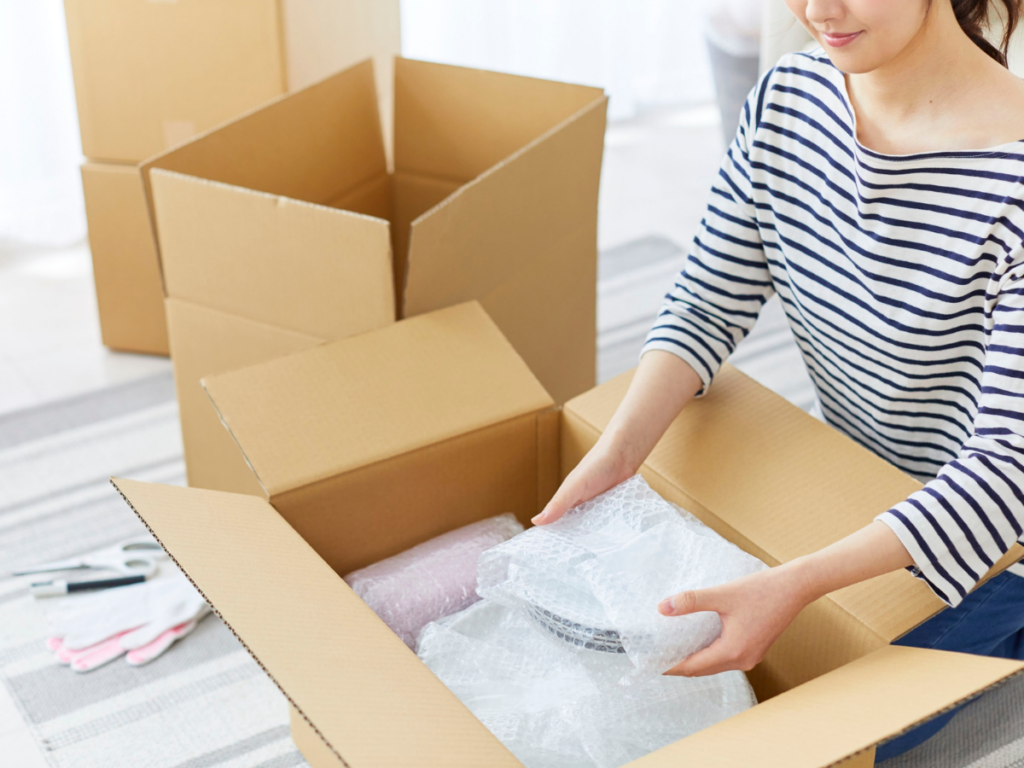
Packing dishes and glassware takes a bit more care than other household items, mainly because even small movements can lead to chips or cracks. The goal is not just to wrap each piece, but to create a setup where nothing inside the box shifts or presses against something else.
When applying packing tips fragile items require, it helps to think about both protection and placement from the start. Begin by wrapping each dish or glass on its own.
Packing paper works well as a first layer because it protects surfaces from scratches, while bubble wrap can be added for extra cushioning. Taking the time to fully cover each item, including edges and rims, helps distribute pressure more evenly if the box is moved or stacked.
Once wrapped, placement inside the box matters just as much as the wrapping itself. Plates are usually safer when packed vertically, similar to how they sit in a rack, since this reduces the chance of weight pressing down on them.
Glassware should be positioned upright, with enough padding around each piece to prevent contact.
Creating Separation And Stability Inside The Box
After wrapping, the next step is making sure everything stays in place. Dividers are especially useful for dishes and glassware because they create individual sections within the box. This keeps items from knocking into each other during transit, which is one of the most common causes of damage.
Even with dividers, there will often be small gaps between items. Filling these spaces is essential. Crumpled packing paper or other soft materials can be used to hold everything securely in place. The idea is to remove any empty space so that nothing shifts when the box is lifted or set down.
This part of the process is often overlooked, but it plays a major role in protecting your belongings. Many packing tips fragile items tend to focus heavily on wrapping, but stability inside the box is what prevents movement in the first place.
Labeling And Handling For Safer Transport
Once your box is packed, how it is handled becomes the next concern. Clearly labeling boxes as fragile helps communicate that extra care is needed.
Adding directional labels, such as indicating which side should remain upright, can also make a difference, especially for glassware that needs to stay in a certain position.
While labeling does not guarantee perfect handling, it increases the chances that movers or anyone assisting with the move will be more mindful. It also helps you keep track of which boxes require careful unpacking once you arrive at your new space.
Labeling is a simple step, but it supports the overall system of packing tips fragile items rely on by extending protection beyond the packing stage.
Refining Your Technique For Better Results
As you pack more items, you will start to notice patterns in what works best. For example, heavier dishes may need additional padding at the bottom of the box, while lighter glassware benefits from more spacing and careful positioning.
Adjusting your approach based on the type of item helps improve results without adding unnecessary effort. It is also helpful to avoid overpacking a single box.
Even if everything fits, too much weight can increase the risk of damage during lifting and stacking. Keeping boxes at a manageable weight allows for better control and reduces pressure on the items inside.
By combining careful wrapping, thoughtful placement, and clear labeling, you create a process that protects your dishes and glassware from start to finish. With the right approach, even the most delicate items can be moved with confidence and arrive in the same condition they left.
What Are The Best Practices For Packing Fragile Items Safely?
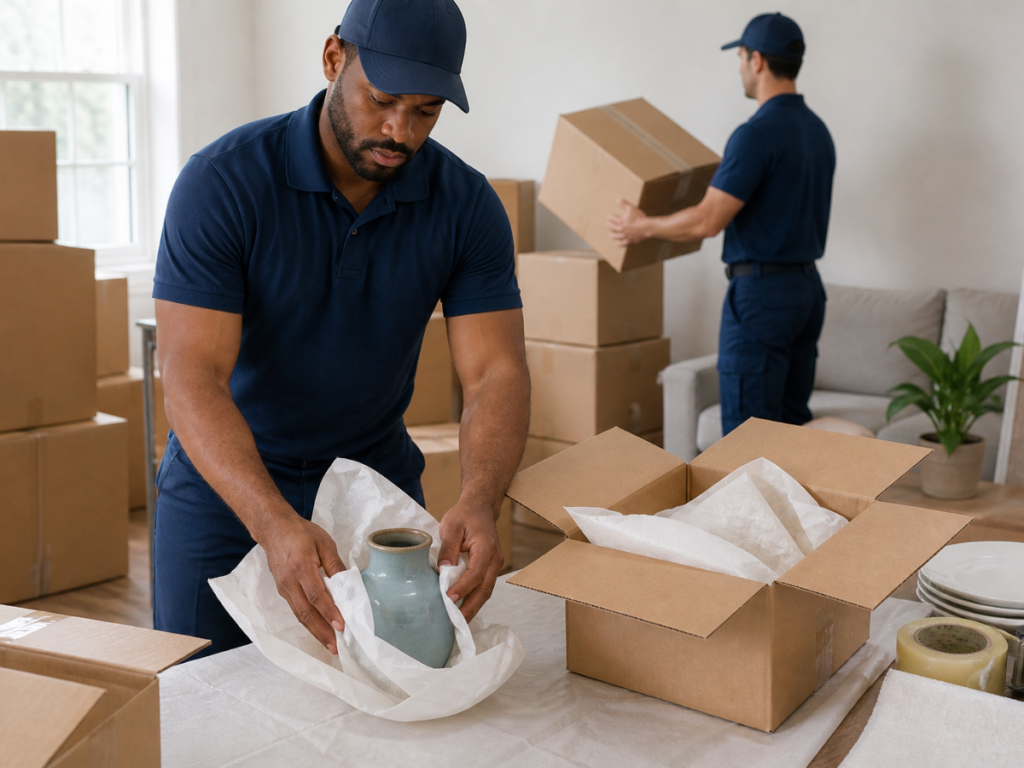
Even with the right materials and techniques, a few practical decisions can make a noticeable difference in how well your belongings hold up during a move.
Best practices are not just about how you wrap items, but how you prepare, organize, and communicate throughout the process. When applying packing tips fragile items depend on, these extra steps to help reduce risk in ways that are easy to overlook.
A thoughtful approach starts before anything goes into a box. Taking time to evaluate what you are packing and how it will travel allows you to make better decisions from the beginning. This kind of preparation creates a smoother process and helps prevent last-minute mistakes that can lead to damage.
When To Use Original Packaging For Added Protection
Original packaging is often the safest option for certain items, especially electronics and specialty glassware. These boxes are designed to fit the item precisely, with built-in supports that protect sensitive areas. If you still have the original packaging, it can save time while offering a level of protection that is difficult to recreate.
For example, electronics often come with molded inserts that hold components in place and absorb impact. Using these inserts reduces movement and keeps pressure away from fragile parts. This approach aligns well with packing tips fragile items require, as it focuses on stability as much as cushioning.
If original packaging is not available, it can still serve as a reference. Noticing how an item was originally secured can guide how you wrap and position it in a new box.
Why Disassembling Furniture Helps Prevent Damage
Large furniture pieces can create unexpected challenges during a move, especially when they include delicate components. Disassembling these items makes them easier to handle and reduces the risk of stress on joints, glass panels, or decorative elements.
For example, removing table legs or separating modular pieces allows each part to be packed more securely. Fragile sections can be wrapped individually and protected without the added weight or pressure of the full piece. This not only helps prevent breakage but also makes loading and unloading more controlled.
Disassembly also gives you more flexibility in how items are arranged during transport. Instead of forcing bulky pieces into tight spaces, you can pack them in a way that minimizes shifting and keeps fragile parts better protected.
How Clear Communication Improves Handling
Packing does not end once the boxes are sealed. How those boxes are handled during the move plays a major role in keeping items safe. Clear communication with anyone involved in the move helps ensure that fragile items receive the attention they need.
Labeling boxes is one part of this, but it also helps to point out specific items that require extra care. Letting your moving team know which boxes contain delicate belongings allows them to plan how those items are loaded and positioned. This reduces the chance of heavier boxes being stacked on top or items being placed in unstable positions.
This step supports packing tips fragile items rely on by extending protection beyond the packing stage. It connects your preparation with the way items are actually transported.
Building A More Reliable Packing Process
Best practices work because they bring everything together into a more consistent system. Using original packaging when possible, disassembling larger items, and communicating clearly all contribute to a safer moving experience. Each step addresses a different part of the process, from preparation to handling.
Over time, these habits become easier to follow and more intuitive. Instead of second-guessing how to pack certain items, you develop a method that works across different situations. This not only protects your belongings but also makes the entire moving process feel more manageable.
By focusing on preparation, structure, and communication, you create a packing strategy that goes beyond the basics and gives fragile items the protection they need from start to finish.
How Should Fragile Boxes Be Labeled And Handled During Transport?
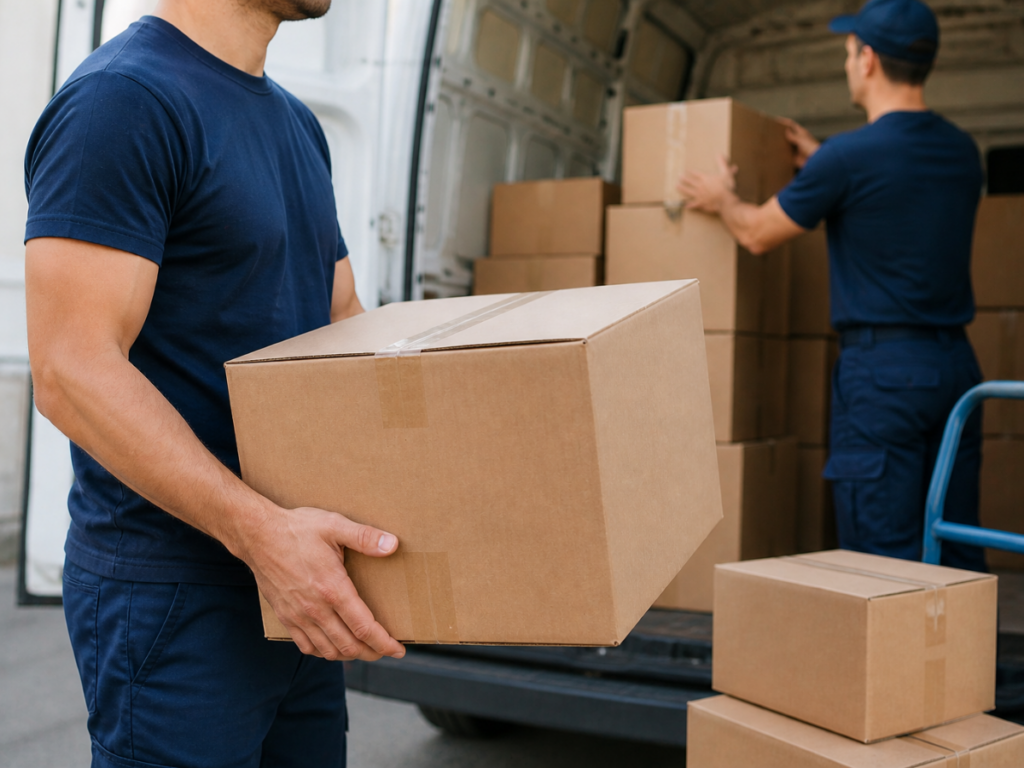
Packing fragile items carefully is only part of the process. What happens after the boxes are sealed plays an equally important role in keeping everything intact.
Labeling and handling help bridge the gap between preparation and transport, ensuring that your effort does not go to waste. When following packing tips fragile items depend on, clear communication and thoughtful handling can make a noticeable difference.
The goal is to make it as easy as possible for anyone moving the boxes to understand what is inside and how it should be treated. Even well-packed items can be damaged if they are stacked incorrectly or handled without care.
Why Clear Labeling Makes A Difference
Labeling fragile boxes is not just about writing the word “fragile” on the side. It is about giving clear, visible instructions that guide how the box should be handled from the moment it is picked up to the moment it is unpacked. Using bold, easy-to-read labels helps ensure they are noticed quickly, even in a busy moving environment.
Adding directional arrows is another important step. These indicators show which side should remain upright, which is especially useful for items like glassware or electronics that need to stay in a specific position. Without this guidance, boxes may be turned or stacked in ways that increase the risk of damage.
Consistent labeling across all fragile boxes also helps create a system. When movers can quickly identify which boxes require extra care, they are more likely to group and handle them appropriately. This supports packing tips fragile items rely on by extending protection beyond the packing stage.
Communicating With Movers For Better Handling
Labels are helpful, but direct communication adds another layer of clarity. Taking a few moments to point out which boxes contain delicate items can help ensure they are handled with more attention. This is especially important for items that may not seem fragile from the outside.
Clear communication also allows movers to plan how boxes are loaded and arranged. Fragile items are less likely to be placed under heavier boxes or in areas where shifting is more likely. Instead, they can be positioned in a way that reduces pressure and movement during transport.
This step is simple, but it often makes a significant difference. It connects your preparation with the actions of the people handling your belongings, creating a more reliable process overall.
When To Transport High-Value Items Yourself
Some items carry not just monetary value, but also personal importance. For these belongings, it may be worth taking an extra step and transporting them yourself. Items such as heirlooms, delicate collectibles, or sensitive electronics can benefit from being kept within your direct control.
Handling these items personally allows you to manage how they are packed, positioned, and moved. It also reduces the number of times they are handled, which lowers the risk of accidental damage.
While this may not be practical for every item, it can provide peace of mind for those that matter most. This approach complements packing tips fragile items benefit from by focusing on risk reduction rather than just protection.
Creating A Safer Transport Process
Labeling, communication, and selective handling all contribute to a smoother moving experience. Each step addresses a different part of the transport process, from visibility to placement to overall care. When combined, they create a system that supports the effort you put into packing.
Fragile items require more than just careful wrapping. They depend on consistent handling from start to finish. By making your instructions clear and ensuring that everyone involved understands their importance, you give your belongings a much better chance of arriving safely.
When Should You Consider Professional Packing Services In Atlanta?
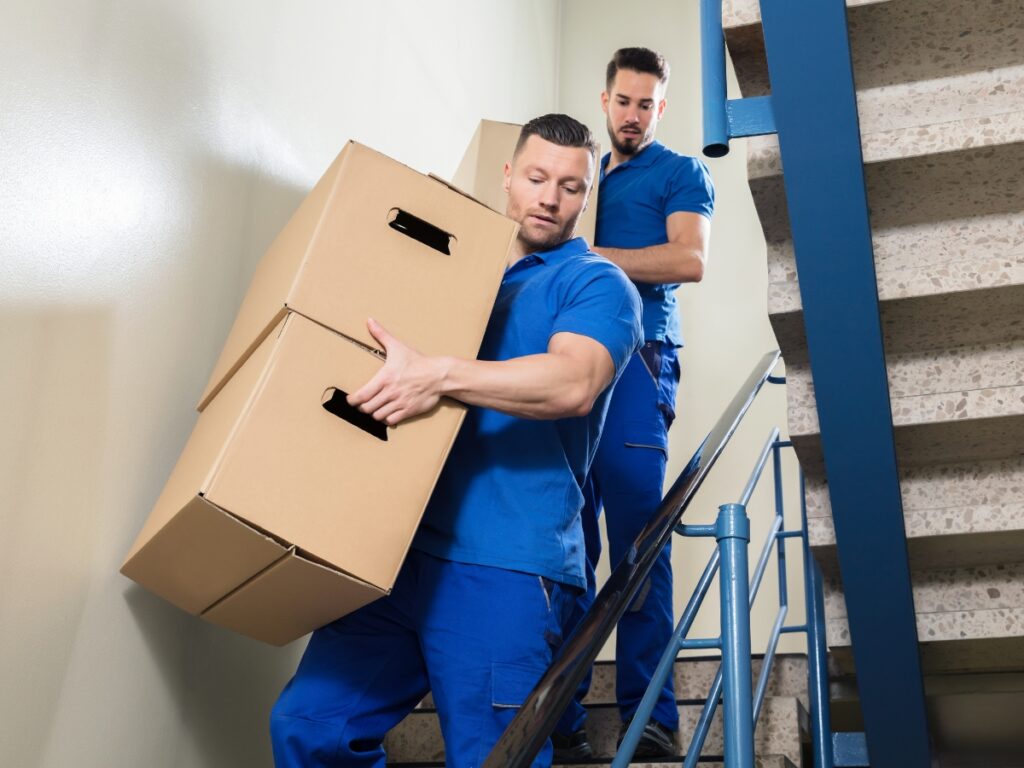
There are times when handling everything on your own simply is not the most practical option. Moving can quickly become overwhelming, especially when you are dealing with delicate or high-value belongings.
If you find yourself running out of time or unsure how to properly protect certain items, it may be worth considering professional help.
Professional packers are particularly useful when a move involves fragile collections, antiques, or items with sentimental value. These situations require more than basic wrapping. They call for careful planning, the right materials, and a method that reduces risk at every stage.
Many packing tips fragile items depend on can be difficult to apply consistently when you are under pressure, which is where experienced packers can step in.
Another reason people turn to professional services is organization. A well-packed move does not just protect items, it also makes unpacking more manageable. When everything is labeled, grouped, and packed with intention, the transition into your new space feels more controlled and less chaotic.
What Are The Benefits Of Hiring Expert Packers For Fragile Items?
Working with experienced packers brings a level of precision that can be hard to achieve on your own. One of the main advantages is the use of high-quality materials.
Professionals know which materials work best for different types of items and how to combine them effectively. This ensures that each piece is protected in a way that suits its shape, weight, and fragility.
Beyond materials, technique plays a major role. Expert packers understand how to minimize movement inside boxes, how to distribute weight properly, and how to handle items that require extra care. These are all key aspects of packing tips fragile items rely on, but they take practice to get right.
Time is another important factor. Packing an entire home can take longer than expected, especially when you are trying to be careful with delicate belongings. Hiring professionals allows you to focus on other parts of the move while knowing that your items are being handled efficiently.
There is also a level of reassurance that comes with experience. Knowing that someone with the right skills is handling your fragile items can reduce stress and make the overall process feel more manageable.
How Professional Packing Improves The Overall Moving Process
Professional packing does more than protect individual items. It improves how the entire move is carried out. When boxes are packed correctly, they are easier to stack, transport, and unload. This reduces the risk of damage not just to fragile items, but to everything being moved.
Well-organized packing also makes a difference once you arrive at your new home. Boxes that are clearly labeled and grouped by category or room are easier to unpack. Instead of searching through multiple boxes for essential items, you can settle in more quickly and with less frustration.
This level of organization supports the principles behind packing tips fragile items require by extending careful handling throughout the entire moving process, not just during packing.
How To Get Started With Professional Packing Services
If you decide that professional packing is the right choice, the process is usually straightforward. It begins with reaching out to a service provider to discuss your needs. Many companies will schedule an assessment to understand the scope of your move and identify any items that require special attention.
For example, Atlanta Pack and Load offers consultations where they evaluate your packing requirements and provide a detailed quote. This step helps set clear expectations and ensures that the right materials and time are allocated for your move.
Once you agree on the details, booking the service secures your packing date. From there, the focus shifts to preparation and execution, with professionals handling the process from start to finish.
Choosing professional packing services is not always necessary, but in the right situations, it can make a significant difference. It allows you to protect your fragile items more effectively while creating a smoother, more organized moving experience overall.
Conclusion
Packing fragile items requires patience, the right materials, and proven techniques to ensure they arrive at your new home intact. From double-boxing glassware and using plenty of cushioning to labeling boxes clearly and keeping them upright, careful preparation makes all the difference.
For those who prefer to leave the delicate work to experienced pack and load professionals, trust Atlanta Pack and Load. Ready to move your valuables with confidence?
Call (770) 779-8959 or get a free quote through our site form today. Let our skilled team handle the fragile items with care, so you can focus on settling into your new space stress-free.